
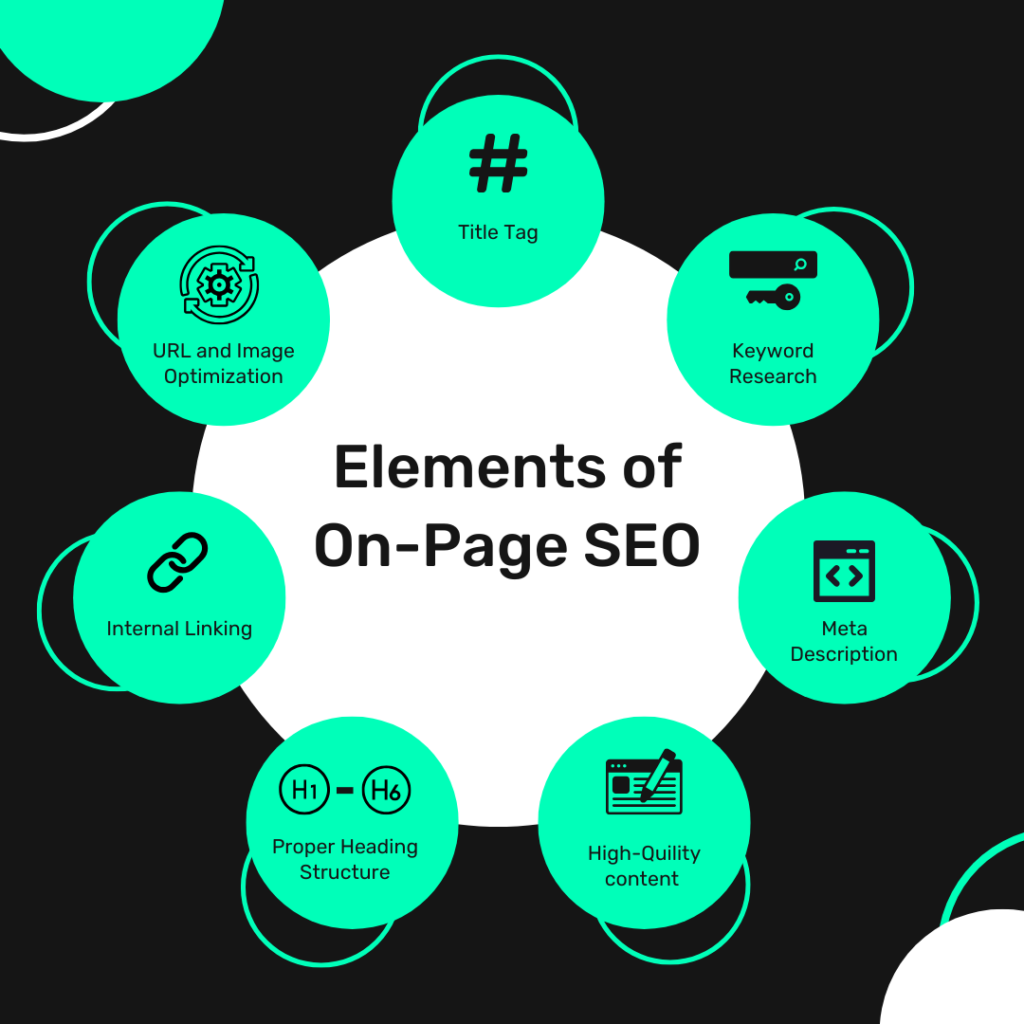
On-page SEO is one of the most important parts of search engine optimization. It focuses on optimizing the content and elements within your website pages to improve search engine rankings, user experience, and organic traffic. Without strong on-page SEO, even the best content may fail to rank on Google.
What Is On-Page SEO?
It refers to the practice of optimizing individual web pages to rank higher in search engines and attract relevant traffic. It includes optimizing content, HTML source code, and website structure to help search engines understand your page better.
Unlike off-page SEO (backlinks and external signals), on-page SEO is fully under your control.
Why Is On-Page SEO Important?
It helps search engines:
-
- Understand what your page is about
- Match your content with user search intent
- Improve user experience and engagement
- Increase visibility in search results
Key Elements of On-Page SEO
1. Keyword Research and Placement
Start with proper keyword research to find terms your audience is searching for. Use your main keyword naturally in:
- Page title
- URL
- Headings (H1, H2, H3)
- First 100 words
- Throughout the content
2. SEO-Optimized Title Tags
The title tag is one of the strongest on-page ranking factors. A good title:
- Is 50–60 characters long
- Includes the primary keyword
- Is clear and compelling
Example:
On-Page SEO Guide: How to Optimize Your Website for Google
3. Meta Descriptions
Meta descriptions don’t directly affect rankings, but they improve click-through rate (CTR). Write descriptions that:
- Are 150–160 characters long
- Clearly explain the page content
- Include keywords naturally
4. High-Quality Content
Content should :
- Be original and valuable
- Answer user queries clearly
- Be easy to read and well-structured
- Match search intent (informational, transactional, navigational)
5. Proper Heading Structure (H1–H6)
Use headings to organize your content:
- Only one H1 per page
- Use H2 for main sections
- Use H3/H4 for sub-sections
6. URL Optimization
SEO-friendly URLs should be:
- Short and descriptive
- Include the target keyword
- Free from special characters
Example:
yourwebsite.com/on-page-SEO-guide
7. Image Optimization
Images improve engagement but can slow down your site if not optimized.
- Use descriptive file names
- Add keyword-rich alt text
- Compress images for faster loading
8. Internal Linking
Internal links connect one page of your website to another. Benefits include:
- Better crawlability
- Improved page authority distribution
- Longer user session duration
9. Mobile Friendliness
Google uses mobile-first indexing, so your website must be mobile-friendly. Ensure:
- Responsive design
- Readable text on small screens
- Fast mobile loading speed
10. Page Speed Optimization
Fast-loading pages rank better and improve user experience. Optimize by:
- Compressing images
- Using browser caching
- Minimizing CSS and JavaScript
- Choosing a reliable hosting provider
Conclusion
It is the foundation of a successful SEO strategy. By optimizing your content, structure, and technical elements, you help search engines understand your website while delivering a better experience to users. When done correctly, on-page SEO can significantly boost your rankings, traffic, and online visibility.